Architectural Film Basics13 min read
Restroom Partition Wrap: Refinish Stalls Without Replacing Them
Restroom partition wrap explained: which stalls can be refinished with architectural film, how to prep and install, and how to keep the finish looking new.
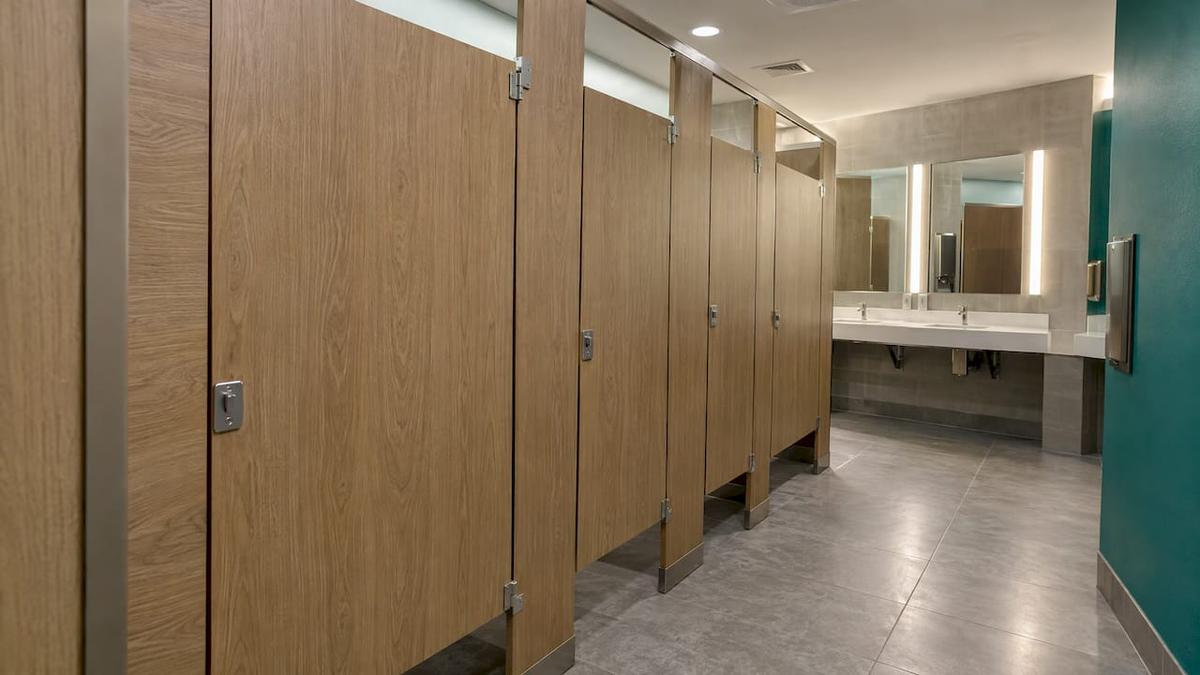
Wrapping restroom partitions with architectural film gives tired stalls a new color, grain or texture in a fraction of the time a tear-out takes, and the restroom can stay in service around the work. The panels, pilasters and doors you already have become the substrate, so you skip demolition, disposal and a long lead time on new partitions. Bodaq is a premium self-adhesive, stretchable interior film from Hyundai L&C, offered in over 450 textures and colors, and this guide walks through where wrapping fits, how the job goes step by step, and how to protect the result in a high-traffic public restroom.
TL;DR
- Wrapping refinishes existing partitions in place, so there is no demolition, no new hardware order and less downtime for a restroom that has to reopen quickly.
- Start with the substrate and the room: material, moisture, traffic and cleaning routine decide how you prep and which film grade you specify.
- The job is won in the prep: clean, degrease, repair, prime where needed, then work the film around edges, hinges and cutouts.
- Bodaq film is stretchable and uses air-channeled adhesive, which is designed to make installation cleaner, with fewer bubbles and less waste.
- Plan a cleaning routine from day one, and keep accessibility and fire-code requirements in the specification.
Table of Contents
- Why wrap restroom partitions at all?
- What partition materials are you actually working with?
- Choosing the film: look, performance and hygiene
- How to wrap restroom partitions, step by step
- How long does the job take, and what does it cost?
- When is a stall ready to wrap?
- Keeping wrapped partitions looking new
- Designing a restroom people remember
- Where Bodaq fits
- Our perspective
- FAQ
- Sources
Why wrap restroom partitions at all?
Partitions are one of the first things guests, tenants and staff judge in a commercial building. A restaurant can have a beautiful dining room and a restroom corridor of dated laminate in a color nobody has ordered since the last renovation. Replacing the partitions is the traditional answer, but it means removing the old units, ordering new ones, waiting for production and shipping, and closing the restroom while crews work.
Wrapping changes the equation. The structure is usually sound: it is the surface that has aged. A film applied to that surface can bring a stall line into a new design language, whether that is warm oak, a quiet stone, a deep solid color or a metallic that reads as brushed steel. For hospitality teams, property managers and designers working with a fixed budget and a fixed reopening date, this is the appeal: the visual impact of a renovation without the disruption of a rebuild.
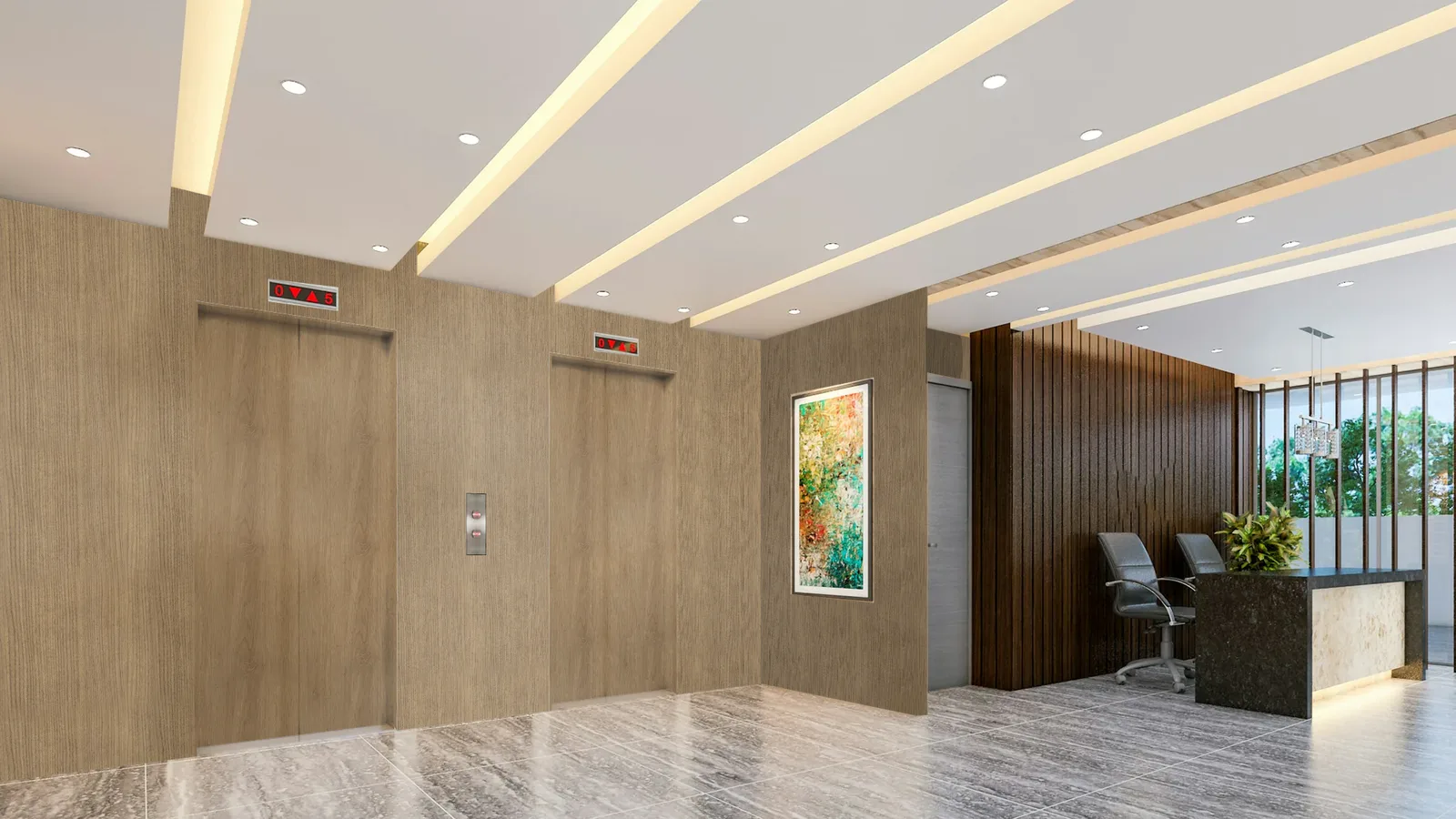
There is also a brand-consistency argument. Because a film catalog covers wood, metal, stone, fabric and solid color families, the restroom can pick up the same material story as the reception desk, the elevator doors and the lobby walls. That continuity is hard to achieve when partitions come only in a manufacturer’s standard color chart.
What partition materials are you actually working with?
Before any film is chosen, identify what is on site. Commercial partitions in the US generally come in five core materials: powder-coated steel, plastic laminate (HPL, high-pressure laminate), solid plastic (HDPE, high-density polyethylene), solid phenolic and stainless steel. A US buyer’s guide to partition materials notes that HDPE and phenolic are the usual starting point for wet or frequently hosed restrooms, while powder-coated steel and laminate suit drier, supervised spaces where budget and color matter.
That tells you something useful for wrapping: the partition’s original material already reflects how the room is used. A school restroom, a stadium concourse and a boutique hotel lobby restroom will each have different panels, different wear patterns and different cleaning crews. Your film specification should follow the room, not the other way around.
| Existing partition | Typical setting | What to look at before wrapping |
|---|---|---|
| Powder-coated steel | Offices, retail, dry and supervised spaces | Chips, dents and rust spots; repair and smooth them before the film goes on |
| Plastic laminate (HPL) | Offices, hotels, back-of-house | Lifting edges and delamination; make sure the surface is bonded and sound |
| Solid plastic (HDPE) | Schools, gyms, wet or hosed areas | Surface texture and any cleaner residue; confirm film grade with the specification |
| Solid phenolic | High-use, humid facilities | Smooth, clean panel faces; check edge condition |
| Stainless steel | Upscale or modern restrooms | Fingerprint oils and polish residue; degrease thoroughly |
Bodaq’s Spec Ready guide to matching film grade to substrate is the place to confirm which film suits which surface before you order. Final thicknesses, fire classifications and warranties are product-specific, so the same buyer’s guide recommends confirming them against the current manufacturer submittal. The same discipline applies to the film: get the technical data sheet for the collection you are specifying and file it with the project documents.
Choosing the film: look, performance and hygiene
The reader of this article is usually weighing three things at once: how the restroom will look, how it will hold up, and how fast the work can happen.
Look. Bodaq organizes its catalog into Wood, Metal, Stone & Marble, Solid Colors and Fabric & Leather collections. In restrooms, we see designers lean on two approaches. The first is color drenching: stalls, walls and doors in one saturated solid, which turns a utilitarian room into a deliberate, immersive space. The second is warmth through texture, such as a wood grain that softens a hard-surface room. You can browse the full range in the Bodaq collections.
Performance. A restroom partition takes bumps, luggage, cleaning chemicals and constant touch. Bodaq positions its film around certified durability for high-traffic environments. For a solid color made with cleaning in mind, look at the Easy Clean High-Performance Collection ECF01. For a crisp neutral that pairs with almost any fixture color, the Refined White Premium Collection BLC07 is a natural candidate.

Moisture. Restrooms are humid rooms. If you are a specifier, Bodaq’s 48-hour adhesion test for moisture-resistant wall finishes shows how the film’s adhesion is evaluated under moisture, which is the data you want to see in a submittal for a wet-adjacent room.
Sustainability. Bodaq adheres to eco-friendly standards, and its stretchable film is designed to minimize waste on cut-heavy jobs like partitions, where small panels and many edges can otherwise generate offcuts.
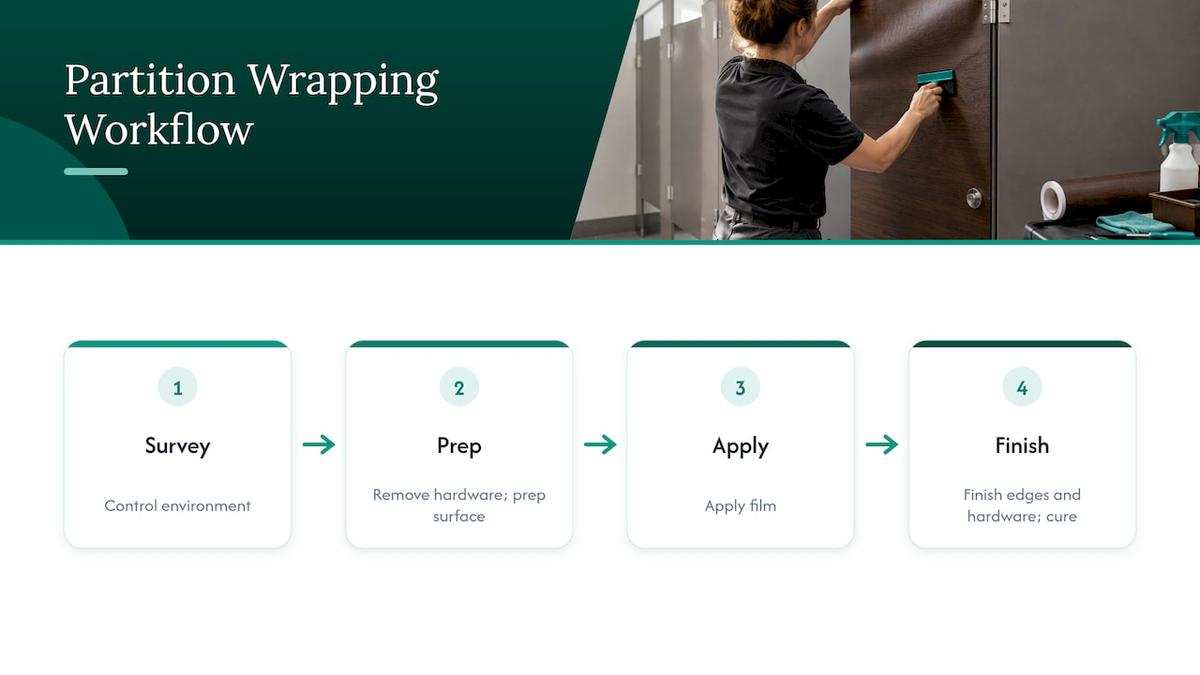
How to wrap restroom partitions, step by step
This is a professional installation routine. Partitions are fiddly: lots of edges, hardware and corners in a small space. Each step below shows what it takes and where jobs usually go wrong.
1. Survey the room and the stalls
Walk every stall with a notepad. Record the partition material, the condition of each panel face and edge, the hardware type, and any damage. Note the temperature and humidity of the room, and whether the restroom has ventilation running. Measure panels, doors and pilasters (the vertical posts that support the stall) so you can plan film cuts and order enough roll width.
Where it goes wrong: ordering from rough estimates. Stall doors, panels and pilasters have different dimensions, and a short roll means seams in places you did not plan.
2. Stabilize the environment
Film and substrate should both be at a stable, moderate temperature when you work. Partition makers are strict about this for their own materials: one solid plastic partition installation manual from Hadrian asks for the panels to stay flat and at about 68°F for 24 hours before and after installation to help prevent warping. Use the same thinking on a wrap job: run the HVAC, let the room settle and avoid working next to a cold exterior wall or a hot-water pipe. Always confirm the film’s recommended application temperature on its data sheet.
Where it goes wrong: wrapping a cold panel in a freshly cleaned room whose humidity is still high from the last cleaning cycle.
3. Remove or protect hardware
The cleanest wrap is one where hinges, latches, coat hooks and bumpers are taken off, not cut around. Label each piece and bag the screws by stall. Where hardware cannot come off, mask it and plan relief cuts.
Accessibility hardware needs care. Under the 2010 ADA Standards, toilet compartment doors and their hardware must comply with section 404, which covers operable parts and clearances. Reinstall every latch and pull exactly as it was, and do not let film thickness interfere with the door’s clearance or operation.
Where it goes wrong: reinstalling hardware in new holes or in the wrong position, which can put an accessible stall out of compliance.
4. Clean and degrade nothing
Surface prep decides whether the film still looks good in three years. Remove soap residue, graffiti, tape adhesive and polish with a suitable degreaser, then wipe with a clean, lint-free cloth and let the surface dry fully. Fill gouges and screw holes, sand any sharp burrs, and make sure laminate edges are bonded down.
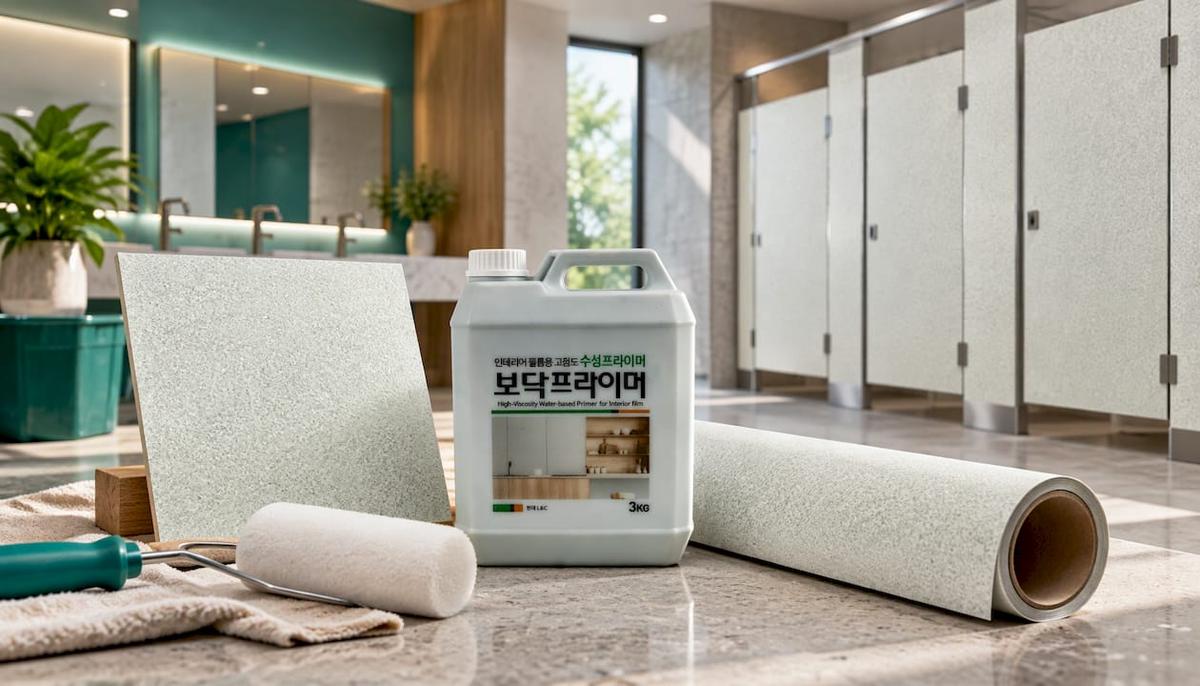
Where the surface is porous or tricky, a primer can improve grip. Bodaq offers a water-based primer in a 3 KG pack among its installation tools.
Where it goes wrong: skipping the degrease on stainless steel or glossy laminate, where invisible oils prevent the adhesive from gripping.
5. Cut with allowance and apply from the center
Cut each piece oversize by a few inches so you can trim in place. Peel back part of the liner and anchor the film at one edge, then work the squeegee from the center outward with overlapping strokes. Bodaq’s air-channeled adhesive is designed so trapped air escapes through the channels, which means fewer bubbles to chase and a cleaner first pass. The film’s stretch is what lets installers ease it over gentle curves and edges rather than piecing it together.
Where it goes wrong: overstretching at corners, which leaves tension in the film that tries to pull back later. Stretch to conform, not to force.
6. Wrap the edges and handle the seams
Edges are where partitions fail first, because hands, bags and cleaning carts hit them. Wrap the film around the edge where the design allows, so the visible edge has no open seam. Where you must join pieces, plan seams in the least visible, least touched location, and match any wood grain or pattern direction across panels and doors so the run reads as one surface.
Where it goes wrong: a pattern running vertically on one stall and horizontally on the next, or a seam placed at hand height on a door.
7. Cut around hardware holes and finish
Locate hardware holes by feel or by pressing lightly, then make clean relief cuts with a fresh blade. Press the film firmly around each opening and edge. Reinstall the hardware, check every door for swing, latch and clearance, and walk the stall line in raking light to catch bubbles or lifted corners.
Where it goes wrong: dull blades that drag and tear the film, or blade pressure that scores the panel beneath.
8. Cure before heavy cleaning
Give the adhesive time to settle before the room returns to full cleaning cycles, following the data sheet for the specific film. Brief the cleaning crew before reopening, because a harsh cleaner on a fresh wrap is the most avoidable early failure.
How long does the job take, and what does it cost?
There is no honest universal number. Time depends on how many stalls you have, the substrate condition and how much prep is needed. What we can say is that wrapping is designed as a faster route than replacement, because you work with the existing structure and avoid the production and shipping wait that new partitions need. Bodaq’s guide to renovating offices with film in hours, not weeks shows how the same logic plays out on larger interior projects, and its benefits for general contractors page covers scheduling advantages for those running the site.
For budgeting, build the estimate from these lines:
- Film, with an allowance for matching and waste
- Primer and prep supplies
- Installer labor, ideally certified installers
- Hardware removal and reinstallation time
- Overnight or off-hours scheduling if the restroom must stay open during the day
Bodaq film is sold through online order or sales inquiry, and prices are quoted per project, so request a quote with your stall count and measurements.
When is a stall ready to wrap?
A good wrap starts with a sound panel. Before you commit to a restroom, check that the substrate is structurally stable: panels are rigid, edges are bonded, hinges and brackets are tight and any corrosion or delamination has been repaired. Moisture matters too: fix leaks and condensation at the source before refinishing, so the surface you wrap stays dry and stable.
If a panel is physically damaged beyond surface repair, replace that unit and wrap the new panel along with the rest, so the whole stall line matches. This approach keeps the visual result consistent while still saving the cost and time of replacing every stall.
Keeping wrapped partitions looking new
A wrap is a finished surface, and it responds well to a simple routine. Establish it before reopening:
- Use the cleaners recommended for the film, and avoid abrasive pads or solvents unless the data sheet allows them.
- Wipe, don’t scrub. Soft cloths and neutral cleaners handle most daily soiling.
- Train the cleaning crew once, and post a one-page reference in the janitorial closet.
- Inspect edges and corners each month, and press down any lifting corner early before it catches.
Bodaq publishes a full guide on how to clean and maintain architectural film. Follow it, and keep the data sheet and warranty terms on file, since the use of unapproved chemicals is the most common reason a finish warranty is questioned on any product.
Designing a restroom people remember
Because restroom partitions are repeated elements, small design choices show up many times over. A few that work well:
- Match the room to the brand. A restaurant can echo its bar front in the stall doors, making the restroom a continuation of the dining experience.
- Use texture where light is soft. A subtle grain or fabric-like finish adds depth in a small, enclosed room, almost like a tailored garment fitted to the space.
- Go bold with solids. A deep green or charcoal on stalls can feel sculptural against light walls, and it hides everyday scuffs better than a pale tone.
- Wrap walls and doors too. Extending the same film to nearby surfaces makes the partitions feel intentional rather than patched.
The wall finishing materials guide shows how film works across other surfaces, which helps when you want one coordinated restroom scheme.
Where Bodaq fits
If you are specifying a restroom refresh, Bodaq Interior Film gives you a catalog of over 450 textures and colors, a stretchable self-adhesive film built for cleaner installation, and installation tools, samples and certified training for professional installers. Request samples to see the colors in your own restroom lighting, and use the collections page to shortlist finishes by family.
Explore the Bodaq Interior Film range and start a quote with your stall count and room measurements.
Dealers and installers can also look at the dealer program and certified training, which are designed to help teams build a repeatable restroom refinishing service.
Our perspective
Restrooms are the rooms people remember for the wrong reasons. A stall line that is scuffed, dated or mismatched quietly says something about the whole building.
We built Bodaq film for exactly this kind of surface problem. It is stretchable, so it conforms to edges and shapes. Its adhesive is air-channeled, so installation is cleaner. And with over 450 textures and colors, a restroom can echo the rest of the space instead of standing apart from it.
Our view is that the best renovation is the one that respects the building you already have. Wrapping lets you change the look of a restroom in a fraction of the time, with less waste and less disruption for tenants, guests and staff. That matters most for hospitality and commercial teams who cannot afford long closures.
Choose the film for the room, prepare the surface properly, brief the cleaning crew, and the finish will repay the care you put into it.
Bodaq
FAQ
Can you wrap any type of restroom partition?
Most commercial partition materials, including powder-coated steel, laminate, solid plastic, phenolic and stainless steel, can be considered for wrapping, provided the surface is sound, clean and dry. Match the film grade to the substrate using the data sheet, and confirm the specification with Bodaq before ordering.
Will a wrap interfere with ADA-compliant stalls?
It should not, if the hardware is reinstalled in its original positions and the door still opens, closes and latches as before. Under the 2010 ADA Standards, compartment doors and hardware must comply with section 404, so check clearances and operation after the wrap is finished.
How should I clean wrapped restroom partitions?
Use soft cloths and neutral cleaners, and avoid abrasive pads and harsh solvents. Bodaq’s care guide explains the recommended routine, and giving your cleaning crew a one-page summary prevents most early damage.
Can the restroom stay open during the work?
Often yes, when you plan the work stall by stall or during off-hours, since no demolition is involved. Bodaq’s film is designed for faster, cleaner installation, which helps hospitality and commercial teams limit downtime. Share your schedule constraints when you request a quote.
How do I choose a color and texture?
Shortlist from the collection families, request samples and view them in the restroom’s own lighting, since fluorescent and warm LED light change how a color reads. Solid colors and subtle woods suit most commercial restrooms, and an easy-clean solid is a strong choice for the busiest rooms.
Sources
- Commercial Toilet Partition Materials Compared
- Solid Plastic Standard Toilet Partitions Installation Manual
- 604 Water Closets and Toilet Compartments, ADA Standards